How it works

Technology turns messages into care signals

Rarus Health turns patient messages, documents and check-ins into care signals. AI structures routine signals. A Care Manager reviews what needs judgment. Clinicians make medical decisions.

Illustration. Not a real patient.

How does a message become a care signal?

Each care signal shows what happened, what may need to happen next, what blocked it and who needs to know.

  1. A message arrives

    A message, voice note, document or check-in answer arrives on WhatsApp.

  2. AI extracts the signal

    The AI reads it and pulls out what happened.

  3. The signal gets a type and priority

    The priority tells the Care Manager how soon to look.

  4. The Care Manager reviews

    The Care Manager sees a summary and a suggested next action.

  5. The clinician gets what needs them

    The care team receives only what needs clinical attention.

Illustration. Not a real patient. Bar lengths show the idea, not measured volumes.

What does Rarus Health automate?

Rarus Health automates five routine parts of care management. A Care Manager stays in control of each.

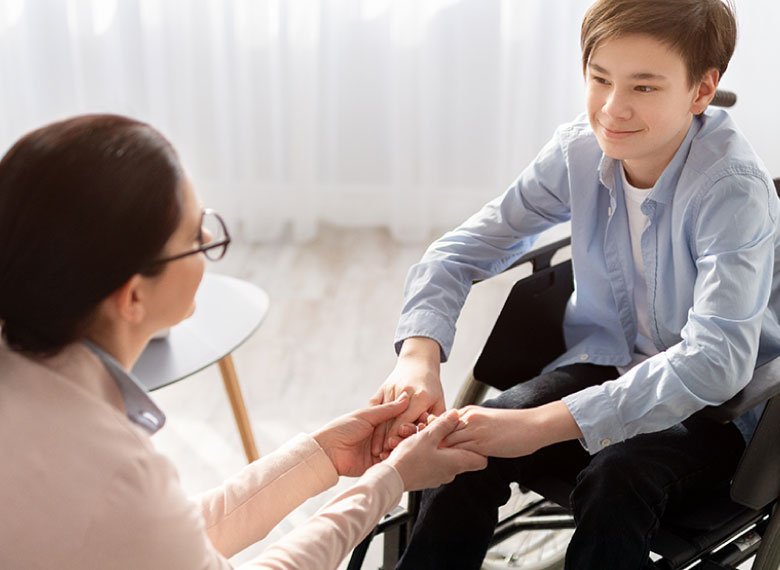
A Care Manager holding the hands of a teenager in a wheelchair at home.

The AI agent runs the everyday conversation.

The Rarus Health AI agent works on WhatsApp, in Spanish or Portuguese. It answers from verified content, asks structured follow-up questions and flags signals that need a person.

The result: automated WhatsApp interactions support routine communication, while Care Managers handle situations requiring human attention according to the agreed service protocol.

A Care Manager can take over any conversation at any moment.

How the AI agent works

Answers come from a verified library.

The AI agent answers from articles that a person has checked. Each answer links to its source.

The result: Care Managers stop answering the same question many times a week.

A person verifies every article before the AI agent can use it.

How the library works

Documents and voice notes become records.

The AI reads photos, PDFs and voice notes, turns them into text and files them in the patient's record.

The result: nobody types up paper reports.

When the system is unsure how to file a document, a Care Manager checks it.

How the reading works

The care team sees an up-to-date summary of each patient.

The AI keeps a short narrative of each patient's situation for the Care Manager and the care team.

The result: every contact starts from the full picture, not a blank page.

The narrative is written for the Care Manager and the care team. Patients do not receive it.

How narratives are written

Care signals reach the Care Manager with a draft reply.

The AI flags each signal, sets a priority and drafts a reply. A Care Manager reviews the draft and passes medical questions to the care team.

The result: changes surface when they happen, not at the next visit.

A Care Manager approves every drafted reply to a health signal.

How health signals are handled

Where do patients and families talk to Rarus Health?

Patients and families talk to Rarus Health on WhatsApp, the app they already use every day.

Nothing to install.

A patient app loses families at download, registration and login. On WhatsApp, the first message starts the service.

People write the way they already write.

Text, voice notes, photos and PDFs all work. A person who prefers to speak does not have to type.

No new software for the clinic.

Rarus Health runs the service and the Care Managers' console. The clinic installs nothing.

What stays with people?

Rarus Health automates tasks, not decisions.

The AI does the routine work.

  • The AI sends check-ins and reminders.
  • The AI answers questions from the verified library.
  • The AI structures care signals and drafts a reply.

The Care Manager decides and acts.

  • The Care Manager reviews each care signal and decides what to send.
  • The Care Manager can take over any conversation, at any moment.
  • The Care Manager removes practical barriers, such as transport or missing documents.

The care team decides on diagnosis and treatment.

  • The care team receives a summary instead of a raw message history.
  • The care team hears about what needs its attention.

Rarus Health does not deliver care, diagnose or prescribe. The care team makes clinical decisions.

What does automation change for a program?

Automation changes the economics of care management. The same Care Managers can follow many more patients, and each patient receives more attention, not less.

A lower cost per patient.

More of the budget goes to the moments that need a person.

More patients covered.

Continuity for a whole population, not only a priority group.

An earlier response.

The care team hears about a change when it happens.

A record of the journey.

Each contact becomes a structured event. Partners receive aggregated, anonymized insight.

What does Rarus Health own?

Rarus Health builds on the best available models and owns everything around them, so it can switch to a better model when one appears.

The conversation system.

Rarus Health built its own system for care conversations on WhatsApp.

The dialog engine and its care conversations.

Program authors write questionnaires as content, with branching, scoring and consent steps built in.

The disease playbooks.

The playbooks hold coordination guidance for each rare disease that Rarus Health covers.

The verified library.

Articles on rights, funding routes and patient organizations, country by country.

The journey record.

The record holds structured events of what happens between visits. No hospital system holds this record.

The evaluation suites.

The suites test the AI against realistic conversations before each release.

Do you want the technical details?

A separate page explains how Rarus Health builds each of the five automated parts. It covers the architecture, the safety measures and the technology stack. Technology leaders and investors who run technical due diligence usually start there.

Talk to Rarus Health

Ask for a demonstration of the service on WhatsApp, or for a technical briefing.

Identify where patients drop out

Do you want to know who builds the technology? Meet the team.